
See your energy, in 2.5D.
A living map of what your home produces, stores and consumes, read straight from your Home Assistant Energy dashboard and drawn over the sun's daily arc. With or without solar.

One card. Endlessly yours.
This is the real card, running on demo data. Drop it on your own roof, repaint it, flip it dark or light, and watch the chips and groups come and go. Everything you see here is a setting.
A curve behind every number.
A chip shows you the value now. Tap it, and Helios opens a detail panel with that reading's own curve across the day, the recorded past on the left, the forecast on the right, so a single figure becomes a story. Tap the production chip for today's solar shape, a group to see when it really runs, the battery for its charge and discharge. Tap again to close. It is all in the live demo above, every chip is tappable.
Not 3D. A painter, one layer at a time.
There is no WebGL, no 3D engine, no depth buffer. Helios paints a single flat basemap, tilts it in CSS, then projects every overlay on top with a hand-rolled camera and lays them down far to near, the painter's algorithm. Light enough to stay smooth on a phone, and it renders where a real 3D layer would break.
Group what you track.
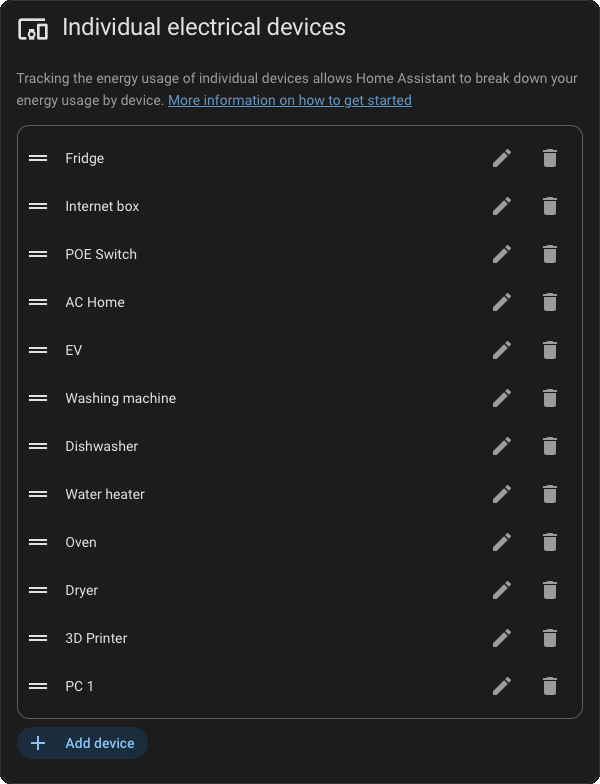
Helios reads the devices from your Energy dashboard and lets you sort them into families, heating, the car, water, appliances, whatever fits your home. Each group gets its own chip, colour and icon around the house, and its own curve in the timeline. Show the ones you care about, hide the rest. In the demo above, the four groups appear, disappear and recolour on every click.
Your data stays home.
No Helios server, no account. The card reads your own Energy dashboard, draws the neighbourhood from OpenFreeMap and the sun from a physical model. The only thing that ever leaves your instance is an approximate location, to fetch the map tiles and the weather from Open-Meteo. Free and open source.
Install, and point it at your energy.
Add Helios through HACS, drop the card on a dashboard, and it wires itself from your Energy dashboard, solar, grid, battery and devices. No solar panels? It still maps your home, grid and consumption beautifully.